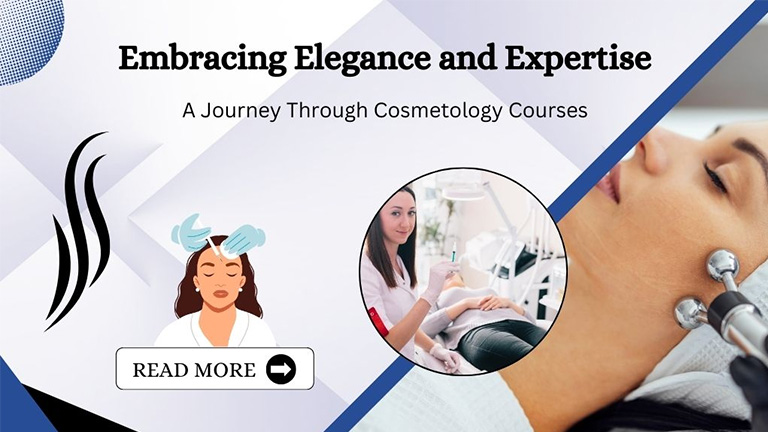
The Future of Cosmetology: Merging Medical Expertise with Artistic Vision
In the earlier days of the beauty industry, there was a clear divide between the “medical” and the “aesthetic.” You went to a doctor for a skin disease and a salon for a glow. However, as we move through 2026, those boundaries have completely dissolved. We have entered the era of Medical Cosmetology—a sophisticated discipline where high-level clinical science is seamlessly integrated with the nuanced eye of an artist.
This evolution is not just about new machines; it is about a fundamental change in how we perceive human beauty and aging.
The “Anatomical Artist”
The modern cosmetologist is no longer just a technician; they are an “anatomical artist.” In leading centers like Dr. Titoria’s Clinics, practitioners use their deep knowledge of facial anatomy—muscular structures, fat pad distribution, and bone resorption—to craft results that are mathematically balanced yet uniquely human.
The 2026 approach utilizes the “Golden Ratio” of facial proportions not as a strict template, but as a guide to restore harmony. By understanding how the face ages in three dimensions, experts can use fillers or biostimulators to provide structural support exactly where the bone has thinned or the fat has shifted, ensuring the face looks natural both in motion and at rest.
High-Tech Precision: The Digital Skin Twin
One of the most exciting breakthroughs in 2026 is the use of AI-driven skin diagnostics. Before a single treatment is administered, many clinics now create a “Digital Skin Twin” of the patient.
Using multi-spectral imaging, practitioners can see:
- Sub-surface Pigmentation: Spots that haven’t even reached the surface yet.
- Vascular Health: Areas of hidden redness or inflammation.
- Pore Congestion: Pinpointing exactly where a deep-clean is required.
This data allows the “artist” to be incredibly precise, targeting only the areas that need intervention while leaving healthy tissue untouched.
The Convergence of Longevity and Beauty
The future of cosmetology is also deeply tied to the Longevity Movement. We are moving away from “anti-aging” (which implies fighting an inevitable decline) toward “age-optimization.”
Modern treatments now focus on Epigenetics—using topical growth factors and exosomes that signal your skin cells to behave as they did ten years ago. By improving the biological “fitness” of the skin cells, we achieve a glow that is a literal reflection of cellular health. This holistic view considers that a patient’s sleep, nutrition, and hormonal balance are just as important to their final “look” as any laser treatment.
Ethics in the Era of “Filter Culture”
As the tools become more powerful, the role of the medical cosmetologist as an ethical gatekeeper drtitoriaclinics becomes more vital. In a world saturated with AI-generated “perfect” faces, the future of the field lies in managing expectations.
The best practitioners are those who have the courage to say “no” to a patient when a requested procedure would look unnatural or compromise the integrity of the face. The goal in 2026 is authenticity. Success is measured by a patient who looks refreshed, vibrant, and healthy—not “different.”
Conclusion
The future of cosmetology is bright, precise, and deeply personal. It represents the perfect marriage of the “Hard Sciences” (Biology and Physics) and the “Soft Sciences” (Psychology and Art). By merging medical expertise with an artistic vision, the clinics of today are doing more than changing appearances; they are helping individuals present their most confident, optimized selves to the world.
In 2026, beauty is no longer a mystery—it is a masterpiece of science and soul.
Leave a Reply